top of page

Ship's Online Store

The pride of Evansville, IN LST 325 is the only Navy monument capable of independent movement. LST 325 is a faithful restoration of a working "workhorse of the sea" that carried US soldiers and Marines to war during WWII and Korea. The Memorial is also a tribute to the city's contribution to the war effort which saw 167 LSTs and 34 other ships of various types produced at the local shipyards making Evansville the highest producing of all the inland shipyards.
R. Ruetter, Evansville, Indiana
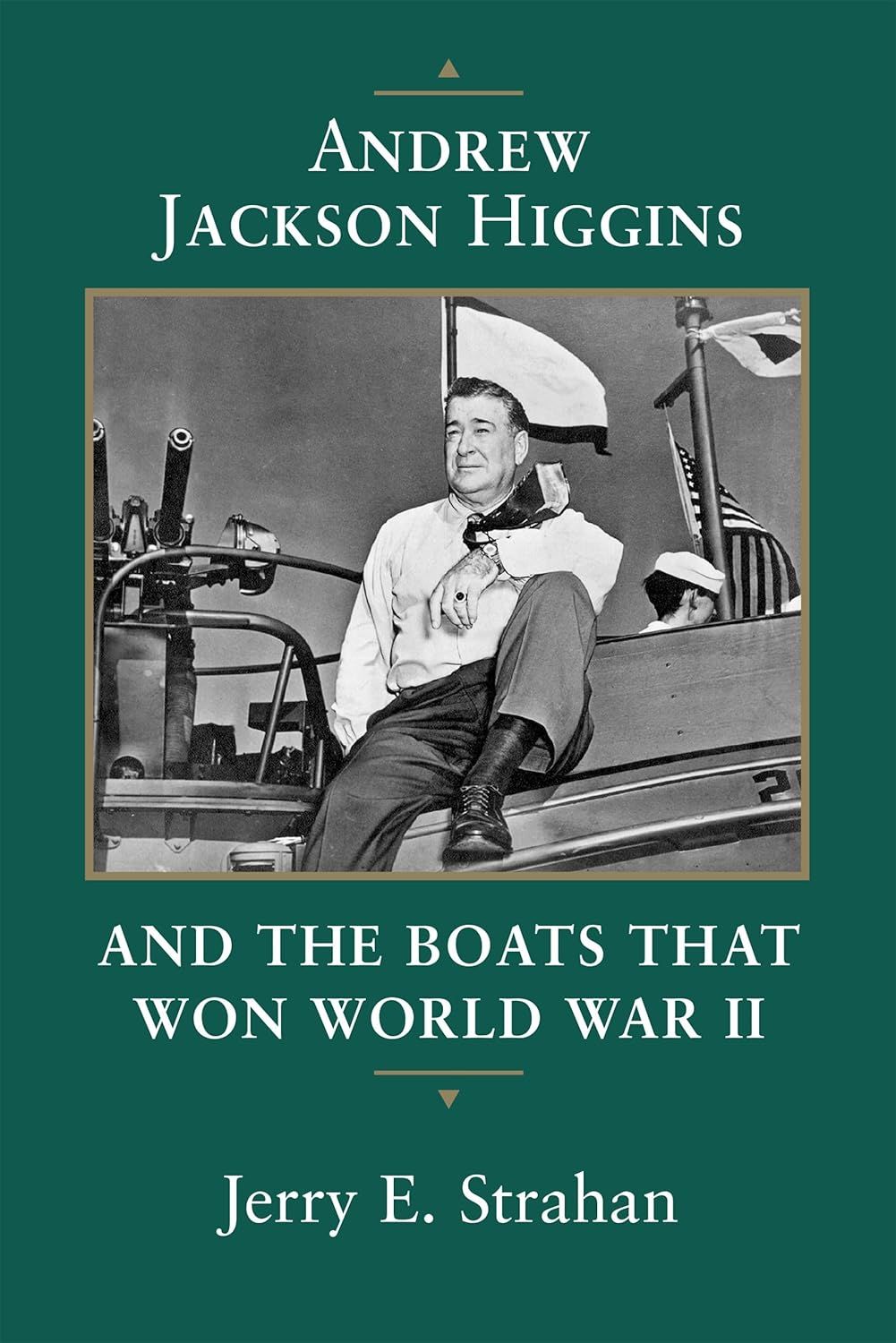
Andrew Jackson Higgins And The Boats That Won WW II
Product Details
UPC:
03019
From the Back Cover
Andrew Jackson Higgins and the Boats That Won World War II, by Jerry E. Strahan, is the first biography of perhaps the most forgotten hero of the Allied victory. It was Higgins who designed the LCVP (landing craft vehicle, personnel) that played such a vital role in the invasion of Normandy, the landings in Guadalcanal, North Africa, and Leyte, and thousands of amphibious assaults throughout the Pacific. It was also Higgins who, after twenty years of failure by the U.S. Navy's Bureau of Ships, designed and constructed an effective tank landing craft in sixty-one hours - a feat that caused the bureau to despise him. In 1938, Higgins owned a single small boatyard in New Orleans employing fewer than seventy-five people. Through exceptional drive, vision, and genius, his holdings expanded until by late 1943 he owned seven plants and employed more than twenty thousand workers. Because of his reputation for designing and producing assault craft in record-breaking time, Higgins was awarded the largest shipbuilding and aircraft contracts in history. During the war, Higgins Industries produced 20,094 boats, ranging from the 36-foot LCVP to the lightning-fast PT boats; the rocket-firing landing craft support boats; the 56-foot tank landing craft; the 170-foot FS ships; and the 27-foot airborne lifeboat that was dropped from the belly of a B-17 bomber. Higgins dedicated himself to providing Allied soldiers with the finest landing craft in the world, and he fought the Bureau of Ships, the Washington bureaucracy, and the powerful eastern shipyards in order to succeed. Strahan's portrait of Higgins reveals a colorful character - a hard-fisted, hard-swearing, and hard-drinking man whose Irishbackground and Nebraska birthplace made him an outsider to New Orleans' elite social circles. Higgins was also hard working, quickly progressing from an unknown southern boatbuilder to a major industrialist with a worldwide reputation. He was featured in Life, Time, Newsweek, and Fortune magazines, and appeared frequently on the front pages of the country's major newspapers. Even Adolf Hitler was aware of Higgins, calling him the "new Noah". Through Higgins' example, we see the way technological innovations, politics, labor unions, changing military agendas, and personalities worked together - and sometimes at odds - for an Allied victory. Strahan has based his work on extensive personal interviews with family members, key employees, and other close acquaintances of Higgins, as well as on previously inaccessible Higgins Industries archives. The result is an extremely informative account of one of the key players, and industries, of World War II.
bottom of page